


The Denis & Lenora Foretia Foundation is equipping 20 young Cameroonians with the skills and tools to address future challenges, not merely discuss them. The 2026 Emerging Leaders Program, themed, « Vision. Action. Impact », goes beyond conventional leadership training, advancing a new model that responds to the complex challenges of our time. It seeks to build young leaders’ capacity to identify development challenges, design practical solutions and translate ideas into meaningful community impact. In essence, the program promotes a simple principle: leadership should be measured not only by the ability to articulate problems, but by the capacity to solve them in a way that is responsive to the aspirations of the population. This approach aims to foster a generation of young Cameroonians who can make tangible contributions to community development and shape the country’s future. This brings to the lime light, the legitimate question about the future of Cameroon’s leadership.
Who Will Lead Cameroon Next? 20 Young Cameroonians Prepare to Turn Ideas into Impact
The leadership question
Cameroon’s next generation of leaders will inherit a country facing complex and interconnected challenges – from employment and skills development to governance, health, economic opportunity, digital transformation and social cohesion. Addressing these challenges requires more than ambition. It requires leaders who can listen, think critically, work across differences and, most importantly, turn ideas into practical solutions.
The question is therefore becoming increasingly important: What does Cameroon need from the young people who will eventually shape its institutions, communities and public policy?
The answer may lie in a new generation of leaders who see leadership not simply as a position of authority, but as a responsibility to solve problems and create opportunities for others. It is against this backdrop that the Denis & Lenora Foretia Foundation’s 2026 Emerging Leaders Program brings together 20 young Cameroonians from August 7-9, 2026 in Yaounde, for an intensive leadership experience designed around three words: Vision. Action. Impact.
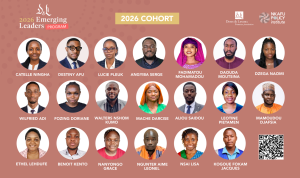
20 leaders. 10 regions. One challenge: turning ideas into impact
As we disclose the lineup of our 20 Emerging Leaders for this 2026 edition, the significance of the cohort lies not only in its size, but in its diversity. The 20 participants bring together young people from Cameroon’s 10 regions, creating a space where different experiences, perspectives and community realities can meet. From different professional and social backgrounds, they will have the opportunity to learn from one another while examining the leadership challenges facing their country. More importantly, they will be immersed in the mindset that frame cohesive policies from multisectoral diversities.
But diversity alone does not create impact.
The more important question is what these young leaders will do with the knowledge, networks and skills they acquire. The program challenges participants to move from vision to action – to identify problems, develop ideas and think about how those ideas can produce measurable change in their communities and beyond. In that sense, the program is less about preparing young people simply to become “leaders” and more about preparing them to become problem-solvers.
This 2026 edition of the Emerging Leaders Program is designed to go beyond the conventional approach to leadership training. It is not simply another program where young people gather to listen, learn and exchange ideas. It is an intentional shift toward a new model of leadership – one that equips young Cameroonians with the skills, tools and mindset needed to identify development challenges and turn ideas into practical solutions.
What problem will these young leaders solve?
This is where the story should move beyond the training room.
At a time when communities face increasingly complex challenges, leadership must be measured not only by the ability to articulate problems, but by the capacity to respond to them, mobilise others and resources to deliver results.
Every participant arrives with a unique experience of Cameroon’s challenges. For some, the priority may be employment and skills. For others, it may be education, health, governance, entrepreneurship, community development, technology or civic participation.
Their stories raise a more interesting question than “What did you learn from the program?” It is: What problem in your community do you want to solve – and what are you prepared to do about it? The answer to that question can become one of the strongest elements of the feature.
Rather than portraying the participants as beneficiaries of a leadership program, we perceive them as young people with ideas about problems that matter to their communities. Their community-based initiatives or projects, policy ideas and personal ambitions or expectations can provide the evidence that the program is trying to create something beyond a three-day training experience: a network of young people capable of translating leadership lessons into action.
Who are the 20 Emerging Leaders ?
Behind the numbers are 20 individual stories.
This cohort is more than a list of names and professional titles. It represents 20 young leaders with distinct motivations, experiences, expectations and ambitions, united by a commitment to solving real problems in their communities. Many have firsthand experience of the challenges they now seek to address through concrete community initiatives and local policy advocacy.
They have identified specific problems, proposed practical solutions and defined what success should look like in terms of improved livelihoods and everyday wellbeing. Their stories reflect a generation prepared to move beyond discussing challenges to taking action. Together, these 20 Emerging Leaders are in effect, 20 voices representing different visions of Cameroon’s future, demonstrating that effective leadership is the ability to turn ideas into measurable impact.
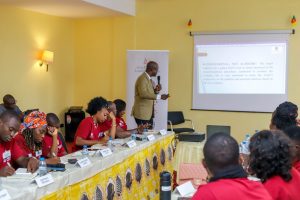
A leadership program putting women and under-represented voices at the centre
Leadership opportunities are not always equally accessible, and the perspectives represented in leadership spaces matter. This 2026 Emerging Leaders Program’s emphasis on women, youth and regional diversity creates an opportunity to examine what a more inclusive leadership pipeline could look like for Cameroon.
The value is not simply in having women and young people present. It is in ensuring that people from different regions and backgrounds have the opportunity to shape conversations, develop ideas and influence decisions.
For a country as diverse as Cameroon, broadening the leadership pipeline can also broaden the range of solutions brought to national challenges. A young woman from one region may experience a development challenge differently from a young man from another. A community-based practitioner may approach a problem differently from an entrepreneur, researcher or public policy professional.
Bringing these perspectives together creates an important question: What becomes possible when more voices have a seat at the table?
From leadership training to a national leadership pipeline
Ultimately, the significance of the 2026 Emerging Leaders Program will not be measured only by what happens during the program. Its longer-term value will depend on whether participants continue to apply what they learn, build networks across regions and sectors, influence their communities and contribute to public conversations.
The 20 young people therefore represent more than a single cohort. They offer a glimpse into the kind of leadership Cameroon may need in the years ahead: inclusive, solutions-oriented, evidence-informed and willing to turn ideas into action. This echoes Solon, the ancient Athenian statesman and lawgiver, who, when asked, “Which constitution is the best?”, reportedly responded: “Tell me first, for which people and for what epoch?” His response reminds us that leadership must respond to the realities and aspirations of its time. And perhaps that is the real question the program invites Cameroon to consider – not simply who will lead next, but: What kind of leaders does Cameroon want to produce, and what kind of country could they help build?
By Ayukmba Nkonghonyor, Deputy Communications Director, Denis and Lenora Foretia Foundation
Email: [email protected]




Leave A Comment